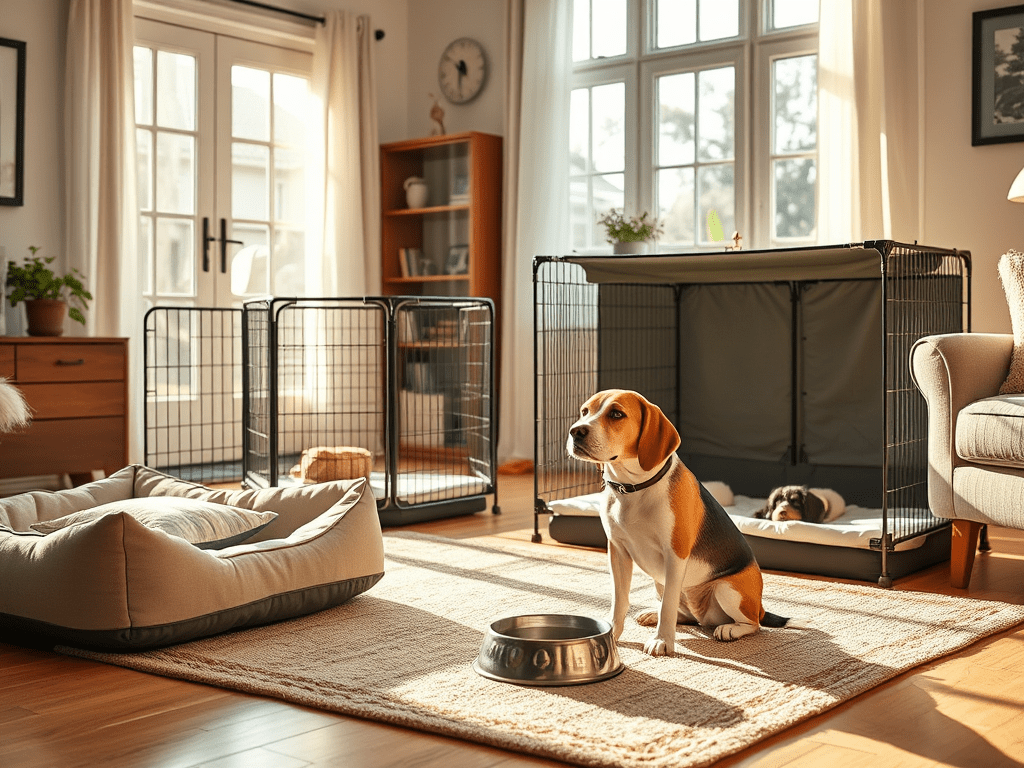
Prepping your home for your first foster dog is one of the most important steps in creating a smooth, low-stress transition—for both you and the dog. Bringing a foster home is a big change, and waiting until the dog arrives to prepare your space can add unnecessary stress to an already overwhelming situation.
I always recommend prepping your home a few days in advance. This gives you time to set everything up thoughtfully and allows you to ease into fostering with confidence instead of scrambling at the last minute.
Supplies You’ll Want Before Your Foster Arrives
Most rescues will provide the basics like food, medications, and sometimes a dog crate. However, there are several additional items that make fostering much easier—especially during those first few days.
- Dog beds
Having at least one comfortable dog bed is essential. My personal dog loves the Bedsure calming dog bed, and I usually keep one or two of these around for fosters as well. I also highly recommend a waterproof and machine washable bed for foster dogs. Waterproof beds are incredibly helpful if accidents happen, since they don’t absorb liquid and are easy to wash. - Play pen panels
A foldable play pen is one of my most-used fostering tools. These panels are extremely versatile—you can use them to block off certain rooms, attach them directly to a crate to create a larger enclosed area, or adjust them as needed. They’re portable, easy to store, and come in clutch when fostering. - Reusable potty pads
I keep several resuable potty pad mats on hand and place them under crates, play pens, and around disposable potty pads. They act as an extra layer of protection for wood floors, which can stain if pee is left too long. - Disposable potty pads
Even if you plan to take your foster outside often, accidents happen. Disposable potty pads provide a designated indoor potty area that helps minimize mess and stress—especially during the adjustment period. - Belly bands for male dogs
Even house-trained male dogs may mark when they enter a new home. Male dog belly bands can be a total lifesaver (and couch saver), even if your foster only needs them for the first few days. - Food and water bowls with a splash mat
A splash mat under food and water bowls helps protect your floors from spills and splashes—especially with nervous or enthusiastic drinkers. - Old towels and blankets
Accidents happen, so having several old towels and blankets ready makes life much easier. These can be used to line the crate, create a cozy sleeping space, and quickly swap out bedding between washes. - Pet shampoo and deodorizer
Dogs coming from shelters often haven’t been bathed recently and can smell pretty rough. Having dog shampoo and dog deodorizer on hand allows you to bathe your foster once they’re comfortable. - Toys and enrichment items
Toys, lick mats, Kongs, and enrichment games help keep your foster mentally stimulated and calm. Lick mats are especially helpful for nervous dogs who need a positive outlet.
Preparing Your Home Space
Once you have the supplies, it’s time to prepare your actual living space.
If possible, roll up rugs and store them away. Rugs are often the first casualty of potty accidents and are much harder to clean thoroughly than hard floors.
If you plan to allow your foster on furniture, apply couch and chair covers ahead of time—especially during the first few days when the dog may still be dirty from the shelter and not ready for a bath.
Remove decorative pillows that could easily be mistaken for stuffed toys. Move valuables like remote controls, books, shoes, and anything chewable to higher surfaces or closed rooms.
Set up the crate before your foster arrives. Add a bed, blankets, and any bowls or enrichment items you plan to use. I also like to keep a sheet nearby to drape over the crate if needed—many dogs feel more secure in a darker, den-like space while they adjust.
Baby gates are another great tool. They allow your home to stay open while blocking access to certain rooms or staircases. This helps prevent accidents and keeps your foster from becoming overwhelmed by too much space too soon.
If You Have a Resident Dog
If you already have a dog, preparation becomes even more important. Being in a new home with new people is overwhelming enough—adding another dog into the mix can be a lot.
Use baby gates or play pens to keep the dogs separated at first, allowing them to see and smell each other safely. This slow introduction helps both dogs adjust without pressure.
I also recommend putting away all toys and food bowls initially to avoid any potential conflict. Once you’ve observed how the dogs interact, you can gradually reintroduce shared items.
Don’t Forget the Cleaners
Lastly, stock up on pet safe cleaners. Accidents are part of fostering, and being prepared makes cleanup quick and stress-free.
Final Thoughts
Prepping your home ahead of time sets both you and your foster dog up for success. It allows you to focus on building trust, creating routine, and helping your foster feel safe—rather than reacting to messes or chaos.
Fostering isn’t about having a perfect home. It’s about creating a calm, prepared space where a dog can decompress, feel secure, and start their journey toward a forever home.
Post includes affiliate links
 Life Unleashed
Leave a comment